
Old Mill Toronto Wedding — The Kiss I Waited For All Day
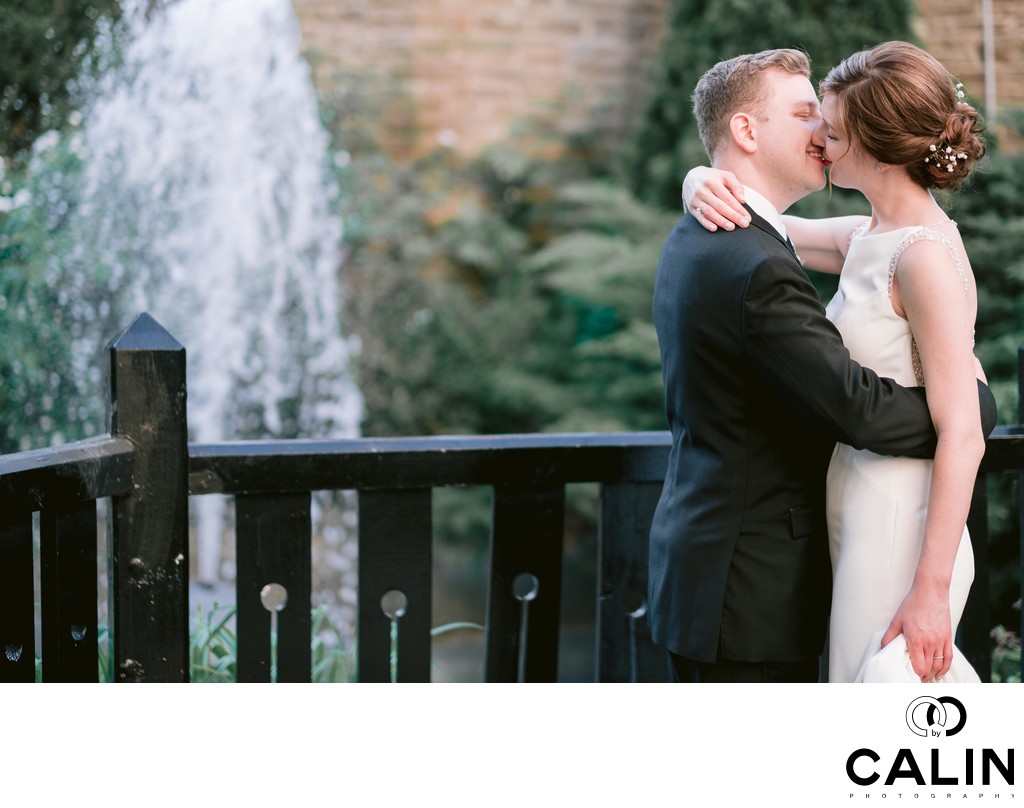
I’ve photographed a lot of wedding days in the city, but an Old Mill Toronto Wedding has a particular rhythm: stone and ivy, quiet pathways, and pockets of soft light that seem to appear exactly when a couple finally exhales and forgets about the schedule. This frame—two newlyweds locked into a kiss, bodies turned inward like the rest of the world got politely dismissed—happened in that brief window when the day stops being a production and becomes something private again.
How this moment unfolded (from where I was standing)
Earlier, everything moved fast: final touches, the rush of greetings, people tugging at jackets, laughter bouncing off the venue walls. By the time we stepped outside, I could feel the shift. Their shoulders dropped. Their hands found each other without asking. I didn’t direct the kiss. I set the stage for it.
I walked them into a clean slice of greenery—enough texture to feel alive, not so much that it competed. I kept them close to the background but not swallowed by it, watching for that moment when they’d stop “posing” and start being newly married. When it arrived, it was immediate: the bride leaned in first, the groom met her halfway, and the space between them vanished like it had never been there.
In that second, I wasn’t thinking about trends or checklists. I was thinking about pressure and release—how wedding days squeeze people with expectations, and how a single kiss can give all the air back.
What you’re actually seeing in the photograph
The couple is centered, full-length, and held together by their body language: torsos angled in, arms close, the kiss acting like a visual anchor. The setting is outdoors with a lush, green backdrop that reads as timeless—no distracting signage, no clutter, no competing highlights. The color palette is natural and warm: greens behind them, soft skin tones, and the classic contrast of formal wedding attire.
The background falls gently out of focus, which keeps the attention where it belongs—on the connection—while still letting you feel the location. That balance is the entire point of photographing a wedding at a venue like this: I want you to recognize the atmosphere without letting it steal the scene.
Gear and lens choice (why I chose what I chose)
I shot this with Canon R5 cameras and Canon RF L-series lenses—because I need speed, reliability, and files that can handle nuanced skin tones and deep greens without falling apart in post.
For this look, I used a Canon RF 70-200mm f/2.8L. I love it at weddings for moments like this: it lets me keep a respectful distance so the couple can stay in their own bubble, while still compressing the background in a flattering way. The perspective feels intimate without me physically stepping into their space.
Techniques that made this frame work
1) Composition: I centered them intentionally. This isn’t a “wide environmental” story frame—it’s a portrait built around emotional symmetry. Their bodies create a single shape, and the negative space around them stays calm and uncluttered.
2) Depth of field control: I kept the background soft but still readable. The blur is doing a job: removing distractions and isolating emotion. If the background were sharp, your eye would wander. If it were too blurred, the Old Mill atmosphere would disappear.
3) Natural light management: The light is soft and flattering—no harsh facial shadows, no blown highlights on the dress. I positioned them so the light wraps rather than slices, keeping the image romantic instead of contrasty and aggressive.
4) Timing over “posing”: The kiss looks believable because it is. I gave them a simple prompt—get close, breathe, forget me—and then I waited. The photograph is a result of patience, not control.
Why this is a great wedding photograph (no vague compliments)
This image is great because it is emotionally unambiguous. There’s no confusion about what matters. You don’t need context, you don’t need a caption, and you don’t need to know their names. The photograph delivers one clear message: these two people chose each other, and for a second they let themselves feel it fully.
Technically, it’s strong because every decision supports that message. The exposure protects the highlights (especially on wedding clothing), the color stays natural, and the background separation is controlled rather than accidental. The frame is clean. The moment is honest. The visual hierarchy is obvious: your eye goes to the couple first and stays there.
Most importantly, it holds up over time. Ten years from now, this still reads like a wedding day should feel—close, warm, and certain.
Post-processing: what I did (and why)
My editing goal here wasn’t to “stylize” the scene into something unrecognizable. It was to refine what the light already gave me and keep skin tones clean. In post, I focused on these specific steps:
Global exposure and contrast: I set a balanced exposure that preserves highlight detail in lighter fabrics while keeping the blacks rich but not crushed. I added gentle contrast to shape the couple without making the greens harsh.
White balance and color calibration: I warmed the image slightly to match the romantic mood, then fine-tuned greens so foliage stays natural instead of drifting neon. Skin tone accuracy is non-negotiable; I adjusted calibration so skin stays warm without turning orange.
HSL refinements: I reduced overly dominant greens and yellow-greens, nudging them toward a calmer, more classic palette. This keeps the background supportive rather than loud.
Local adjustments: I subtly lifted brightness on faces and hands to guide attention. If anything in the background pulled too hard, I lowered it with targeted exposure control rather than flattening the entire image.
Skin retouching (light touch): I kept texture. The goal is to remove temporary distractions (minor blemishes, stray marks) without turning people into plastic. I evened transitions gently and avoided over-smoothing.
Sharpening and noise management: I applied selective sharpening where detail matters (faces, edges of attire) and kept the background smoother. Noise reduction stayed conservative so the image retains a film-like cleanliness without losing detail.
Finish: A subtle vignette to hold the eye in the center—barely noticeable, but effective.
How this kiss fits into the full Old Mill story
I always think of this photograph as the hinge: everything before it is anticipation, everything after it is celebration. When I’m delivering a gallery from an Old Mill Toronto Wedding, I want moments like this to feel inevitable—like the day was always moving toward them finding each other in the middle of it all.
If you want to see how the energy shifts once the couple steps back into the party, the next chapter lives in the courtyard: newlyweds dancing in the Old Mill courtyard. And if you want a frame that’s pure affection—no performance, no tension—this one pairs beautifully with the kiss: bride hugging and kissing her groom.
That’s the thing about this venue and this kind of light: it doesn’t need exaggeration. It rewards calm direction, precise timing, and a photographer willing to let real moments happen.