
Old Mill Toronto Wedding: A Bride & Bridesmaids Portrait Built on Light, Laughter, and Craft
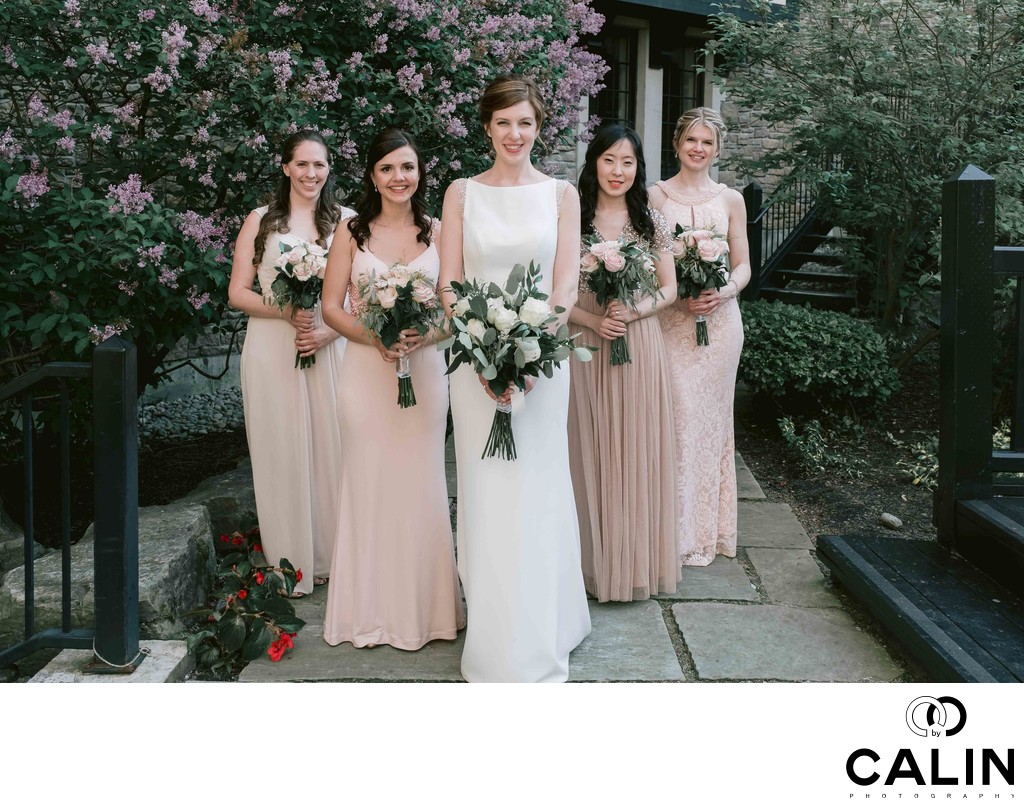
I’ve photographed a lot of wedding mornings in Toronto, but there’s a particular kind of calm confidence that shows up at the Old Mill. The stone, the greenery, the way the light rebounds in the courtyard—everything there feels designed to make portraits feel effortless. On this day, I leaned into that atmosphere and made a frame that, to me, defines what an Old Mill Toronto Wedding can look like when the energy is right: joyful, polished, and completely human.
How I Set the Scene (and Why I Chose This Exact Spot)
Before I pose anyone, I walk the space and read the light. I’m looking for two things: flattering direction on faces and a background that supports the emotion without competing for attention. The Old Mill courtyard gives me both. The sun hits the walls and bounces back in a soft wash—clean, bright, and forgiving—so skin tones stay fresh and eyes stay alive. That’s the kind of natural light I want for a bride surrounded by her closest friends.
I brought the bride and bridesmaids into position once I found that sweet pocket of brightness. I didn’t want “perfect symmetry” at the expense of personality. My goal was to keep them close enough to feel connected, but arranged in a way that lets each face breathe. I’ll direct posture and spacing, but I’ll also leave room for a split-second laugh to take over—because that’s the moment that reads as true.
The Moment in Front of Me: What I Was Actually Photographing
What I remember most is the bride’s expression: that mix of excitement and relief you see when the day has finally arrived and the people you love are physically right there beside you. The bridesmaids brought the spark—playful, supportive, slightly chaotic in the best way—and the bride stayed centered in it all. That contrast is gold for storytelling: one calm anchor, a ring of energy around her, and a shared sense that the best part of the day is still ahead.
In my head, I’m always balancing two narratives at once. One is the obvious story—bride with her bridesmaids. The other is the quieter story—what it feels like to be held up by your friends when the stakes are high and the emotions are real. This is the kind of frame that becomes more valuable with time, because it’s not just about how everyone looked; it’s about how the bride was supported.
Camera & Lens Choices (Canon R5 + Canon RF L-Series)
I shot this on Canon R5 bodies, and I relied on my Canon RF L-series lenses to keep the rendering clean and the color consistent. For a portrait like this, I want edge-to-edge reliability, quick autofocus that locks on eyes without hesitation, and a look that stays elegant even when the group shifts by an inch.
If I’m describing the “feel” of the image: it reads like a short-telephoto portrait—natural perspective, flattering compression, and separation that keeps the faces dominant. Based on that look, this is the kind of moment where I’d typically live on an RF L lens in the 50–85mm range, choosing an aperture that gives me softness in the background without risking a bridesmaid slipping out of focus.
Techniques I Used: Light, Composition, and Depth of Field
The lighting decision here is simple but decisive: I used the courtyard’s bounce as my key light. That means no harsh overhead shadows and no raccoon-eye problem. The faces look open because the light source is effectively larger and softer, created by the environment itself.
Compositionally, I aimed for a classic portrait structure with a modern, relaxed edge. I keep the bride as the visual priority, but I let the bridesmaids form a supportive rhythm around her. I’m watching shoulders, hand placement, and micro-spacing so the group reads as one unit rather than five separate people standing near each other.
Depth of field is where wedding portraits can quietly fail. Too shallow and half the bridal party goes soft. Too deep and the background gets busy. I choose a middle ground: enough depth to keep faces consistently sharp, enough blur to keep the viewer’s attention exactly where it belongs.
Why This Is a Great Wedding Photograph (My Unequivocal Critique)
This is a great wedding photograph because it does two jobs at the same time—and it doesn’t compromise on either. First, it flatters: the light is soft, the faces are bright, and the scene feels clean and intentional. Second, it hits emotionally: the image carries genuine happiness without looking staged.
Technically, the exposure feels confident. I don’t see the timid “play it safe” underexposure that ruins skin tones and makes a bright location look dull. The highlights feel controlled, the skin tones feel natural, and the contrast is shaped in a way that keeps the image airy rather than harsh.
But the bigger reason it works is the energy. The bride isn’t isolated; she’s supported. The bridesmaids don’t look like props; they look like friends. The photograph communicates celebration without shouting, and that’s the difference between a competent portrait and a memorable one.
Post-Processing: What I Did (and Why)
My post-processing goal for an Old Mill Toronto Wedding portrait is consistent: keep the light feeling natural, keep skin tones honest, and preserve the texture that makes the image feel real. I’m not trying to “transform” the scene—I’m refining what was already there.
Here’s what I typically apply in detail:
- White balance refinement: I fine-tune temperature and tint to keep the courtyard’s warm bounce from going too yellow or too green. Skin must stay believable first, aesthetic second.
- Highlight control: I pull back bright areas (especially on dresses and sunlit walls) so the image stays luminous without losing detail.
- Shadow shaping: I lift shadows selectively—mostly around eyes and under chins—so faces remain dimensional but not heavy.
- HSL calibration: I subtly manage greens and warm tones so foliage and stone don’t contaminate skin color. This is where “natural” is either protected or destroyed.
- Local dodge & burn: I guide attention by brightening faces slightly and deepening minor distractions. This is controlled, low-opacity work—not a dramatic effect.
- Skin finishing (light touch): I reduce temporary redness and even out minor patchiness while keeping pores and real texture intact. The goal is “photographed at her best,” not plastic.
- Lens corrections & micro-contrast: I correct for optical quirks and add just enough clarity/texture in the right places to keep the image crisp at print size.
- Consistent color grade: I keep the palette soft and cohesive so the frame feels timeless and matches the broader wedding story.
What Happened Right Before This Portrait
The best bridal party portraits usually come after a moment of unfiltered fun, because it lowers everyone’s self-consciousness. I often let the bridesmaids shake out the nerves—jokes, quick phone photos, a little playful chaos—then I step in and direct with clarity. If you want to see that side of the sequence, the energy is right here: bridesmaids take selfies at Old Mill Toronto.
How This Portrait Fits the Full Old Mill Story
For me, a full Old Mill Toronto Wedding gallery needs both: the collective joy of the bridal party and the quiet strength of a solo bridal portrait. This image is the “together” chapter—support system, anticipation, and personality in one frame.
If you want to see the complementary moment where the bride stands on her own, focused and luminous, that’s here: bridal portrait at Old Mill Toronto.
And if you’re planning your own day at this venue and want to explore the overall look and feel of the location through my work, start with the main collection: Old Mill Toronto Wedding.