
Old Mill Toronto Wedding: The Frame That Told Me Everything
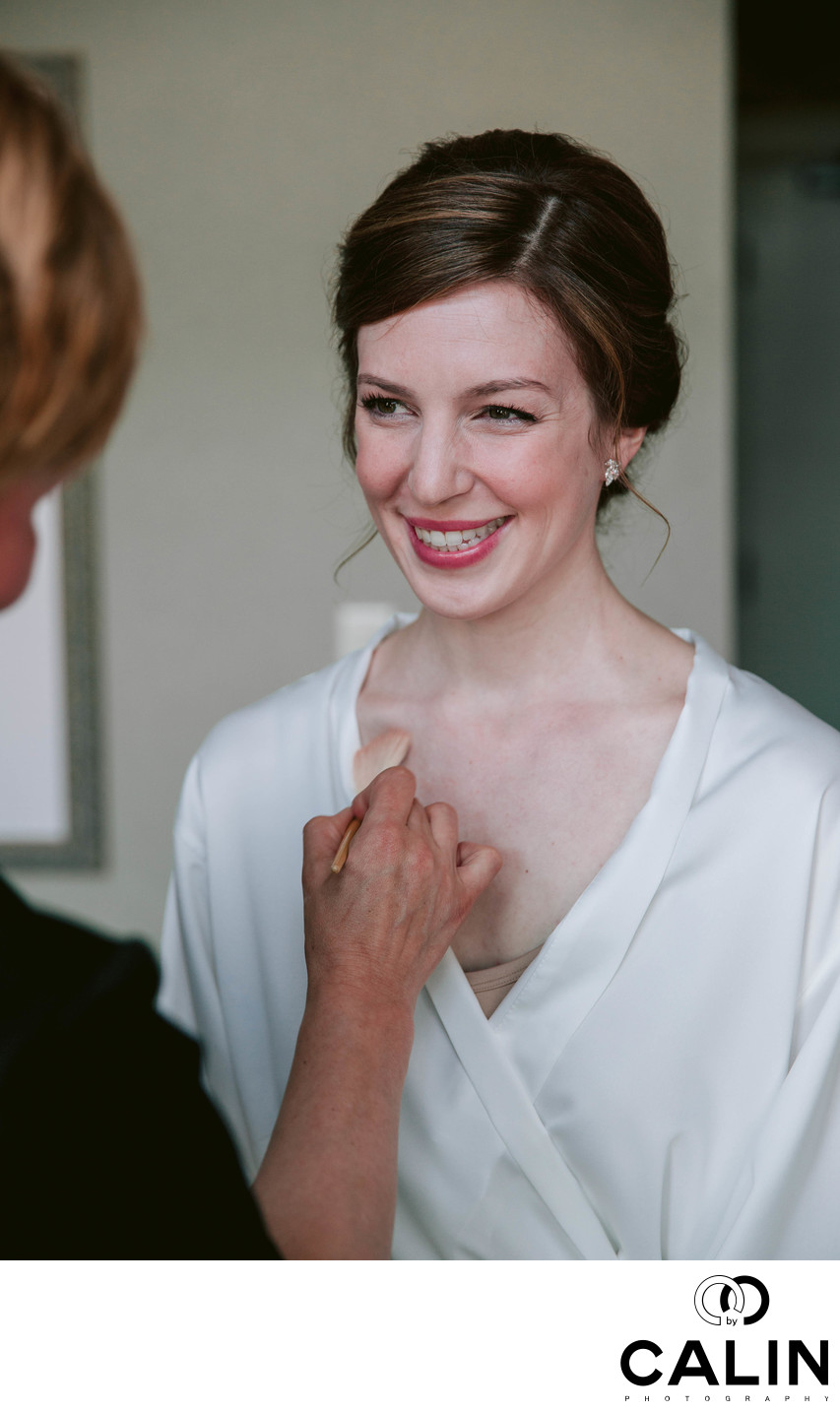
There are photographs that document a wedding day, and then there are photographs that explain it. This is one of those frames for me—the kind I can still feel in my hands when I remember the shutter press. I took it during an Old Mill Toronto Wedding morning, in that in-between time when the room is busy but the bride’s mind has already stepped into the ceremony.
The moment I saw it coming
I was in her getting-ready space at Old Mill, moving quietly the way I always do at this part of the day—slow steps, soft voice, no sudden gestures—because the emotional temperature in the room can change in a breath. Someone was finishing a last detail off-frame, and conversation bubbled around her like background music. Then she turned slightly toward the window and smiled, not “for the camera,” but because something real landed: a comment, a memory, a realization that the day had actually arrived.
I didn’t interrupt it. I didn’t ask her to hold it. I didn’t re-direct her chin or “fix” the moment. I simply recognized what it was: a clean, honest beat of joy in the middle of pre-ceremony nerves. That’s the kind of moment I’m always hunting for at an Old Mill Toronto Wedding—because it’s timeless, and it’s personal, and it’s the truth.
How I made the photograph (camera, lens, and intent)
I photographed this with a Canon R5 and a Canon RF L-series lens (an RF mount Canon L lens), because I want two things in a room like this: (1) confidence in autofocus on an expressive face, and (2) the rendering you only get from top-tier glass—clean contrast, controlled flare, and gentle falloff that feels natural instead of “effect-y.”
My approach here was to let the window light do the heavy lifting. At Old Mill, the getting-ready spaces often give you directional light that has shape but doesn’t look dramatic for the sake of drama. I positioned myself so the light would sculpt her cheek and jawline while still leaving enough openness in the shadows to keep the photograph friendly. The goal wasn’t “moody bridal portrait.” The goal was: she looks like herself, on her best day, in light that flatters without announcing itself.
Compositionally, I committed to her expression. I wanted her eyes and smile to be the only obvious destination in the frame. That means simplifying everything else: I used a perspective that reduces background clutter, kept lines calm, and leaned into a shallow depth of field so any distractions fall away without feeling artificially blurred.
The story behind the frame—what was happening in the room
What I love about this part of an Old Mill Toronto Wedding is that the energy is layered. There’s the practical layer—timelines, zippers, earrings, a dress hanger that needs somewhere better to live. And then there’s the emotional layer, which is much quieter: parents trying not to cry too early, friends doing comedy to keep the room light, and the bride moving through it all like she’s both present and already halfway down the aisle.
Right before I made this image, I watched her do that subtle wedding-day scan: she checked the room without looking like she was checking the room. She took in faces. She listened. She breathed. Then the smile came—easy, unforced, and bright—like a small release of pressure. My job in that instant was not to become part of the moment. My job was to preserve it with respect.
Why this is a great wedding photograph (in plain language)
This image is great because it delivers two things at once: emotion and craft. Emotionally, the smile reads as genuine. It’s not a posed “bridal smile,” where the cheeks are held too long and the eyes stop participating. Her eyes are alive. The expression is timed perfectly—right on the peak—so it feels like you walked into the room at the best possible second.
Technically, it’s great because nothing in the execution competes with the subject. Focus is decisive where it needs to be (on her face), depth of field is shallow enough to isolate but not so thin that it looks fragile, and the light shapes her features without harsh shadow edges. The photograph feels effortless, but it’s only effortless because every choice supports the same intention: honesty, elegance, and clarity.
And here’s the part most people don’t articulate: a great wedding photograph is also great because it holds up when the excitement fades. Ten years from now, this won’t feel like a trend. It will feel like a memory that stayed intact.
How I processed the image (detailed postproduction workflow)
My postprocessing goal was to protect what was already working: flattering light, real skin texture, and a clean emotional read. I don’t “paint over” moments like this—I refine them. My workflow is built around consistency, skin realism, and tonal control.
1) Color management and exposure balance: I started with a neutral baseline—setting overall exposure so her skin sits in a healthy midtone range, then pulling highlights back just enough to keep the brightest areas smooth. I gently opened shadows so the image stays bright and welcoming without looking flat. The key is preserving contrast in the face while keeping the room’s brightness believable.
2) White balance and skin tone accuracy: Window light can shift cooler or warmer depending on surrounding surfaces. I corrected white balance so whites look clean while keeping skin tones natural. I fine-tuned tint to avoid green/magenta contamination—especially important in indoor spaces where mixed light can sneak in.
3) Local adjustments for shape: I used subtle dodging and burning to reinforce the natural direction of the window light: a touch of lift where the light naturally lands, and gentle restraint in areas that can pull attention away. This is not “beauty retouching.” It’s sculpting the existing light so it reads the way it felt.
4) Skin retouching with restraint: I kept pores and real texture. I removed only temporary distractions (small blemishes, stray flyaways that cut across the face) and avoided plastic smoothing. The goal is that she still looks like herself at close viewing distance.
5) Color grading for warmth and cohesion: I added a gentle, film-leaning warmth in the midtones while controlling saturation in reds so skin doesn’t go orange. I also kept greens/yellows in check (common indoors) so the palette stays elegant and consistent.
6) Finishing: sharpening, noise, and subtle vignette: I applied targeted sharpening to the facial features (especially eyes and lashes) rather than global over-sharpening. Noise reduction stayed light to preserve detail. Finally, a very soft vignette helped keep the viewer’s attention centered without making the effect obvious.
What I look for at an Old Mill Toronto Wedding
The Old Mill gives me what I want as a photographer: character without chaos. Textures, warm interiors, and window light that can be shaped quickly—perfect for storytelling. But the venue is only half of it. The other half is pace. I build a calm rhythm early in the day so that when real emotion appears, it has space to breathe. That’s how images like this happen.
Explore the full story
If you want to see how this moment fits into the rest of the day, you can explore the full Old Mill Toronto Wedding gallery. For more of the morning coverage with the same documentary focus, visit bride getting ready at Old Mill Toronto. And if you love the quiet details that set the tone—dress, jewelry, and the pieces that matter up close—see bride’s details at Old Mill Toronto.