
Old Mill Toronto Wedding Moment: When the Letter Changed the Room
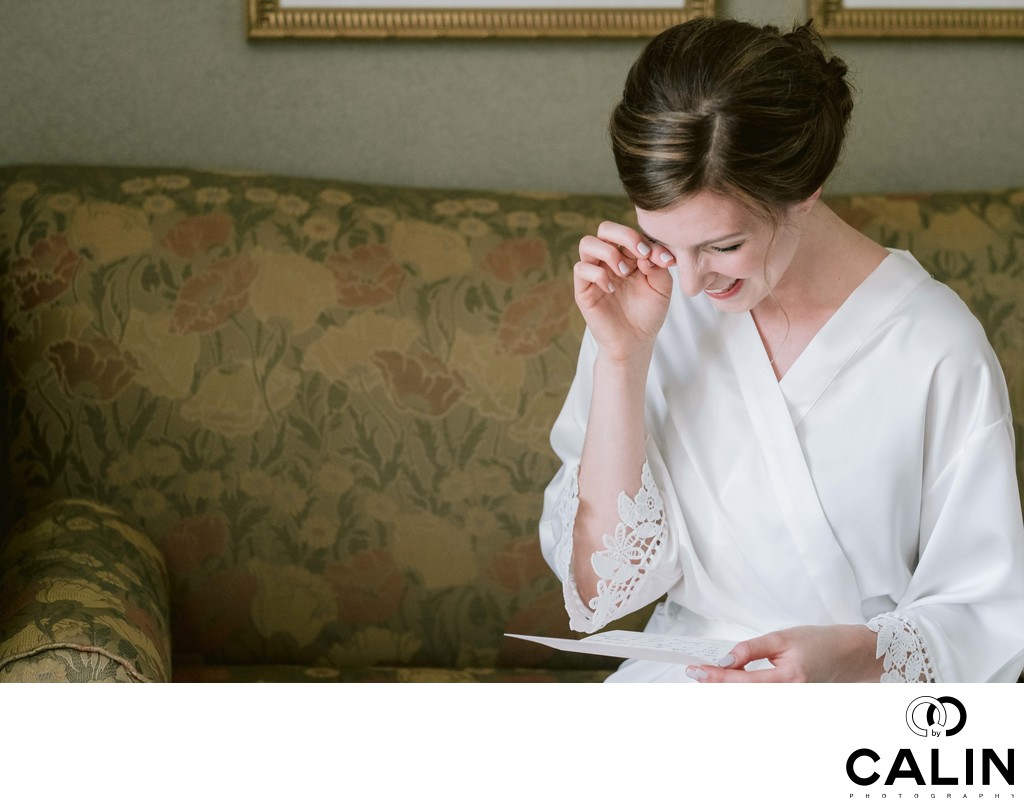
I remember the exact second the energy shifted. One moment, the suite was a gentle swirl of fabric, perfume, and quiet footsteps; the next, everything narrowed to a single page held in trembling hands. As the photographer, I’m trained to anticipate: the inhale before laughter, the glance before tears, the way a room goes still before something meaningful lands. This is one of those frames I can feel again just by looking at it.
The scene is simple on the surface—two people dressed for their wedding day, standing together in a lush outdoor setting, wrapped in greenery, light, and that unmistakable pre-ceremony electricity. But what’s happening inside the moment is anything but simple. The letter did what great vows do: it made time slow down.
How I Set Up This Image (and Why I Stayed Out of the Way)
When I photograph an Old Mill Toronto Wedding, I’m always watching for the quiet beats that tell the real story—the parts that happen between the schedule blocks. The letter exchange is one of those. It’s not a performance; it’s a private ritual that just happens to take place in a beautiful environment.
I positioned myself so I could see their faces without turning the moment into a production. My goal was to create space for them to be honest, while still crafting an image that feels intentional. The background here is richly textured with greenery, and I used that as a natural stage: it’s clean, timeless, and it isolates emotion without needing props.
What You See in the Frame
The bride stands in a classic white gown, bouquet cradled at midline, her attention drawn inward as she reads. The groom, in a dark suit with a boutonniere, leans in close—present, steady, and fully engaged. Their posture reads like trust: no stiffness, no “camera posture,” just a shared pocket of intimacy in the middle of a big day.
The setting feels like a garden edge—dense trees and foliage forming a natural wall behind them. That green backdrop does something powerful: it makes the white dress and skin tones pop, and it gives the whole frame a calm, protected feeling, like the world is paused just outside the leaves. (Photo preview source: the page screenshot I captured.)
Camera, Lens, and the Look I Was After
I shot this with Canon R5 cameras and Canon RF-mount L-series glass—my go-to combination for weddings where I need speed, reliability, and files that hold up through detailed postproduction. For this image, I chose a Canon RF L lens that lets me work quickly while still giving me that creamy separation between subject and background.
The defining visual choice here is depth of field. I wanted the couple to feel carved out of the scene—emotion in sharp focus, environment softened into color and shape. That shallow focus also helps the viewer read the moment correctly: this is not about the location first; it’s about what the words are doing to them.
Lighting: Natural, Soft, and Carefully Managed
This image works because the light behaves. Outdoors, that’s never guaranteed. Here, the illumination is soft and flattering—no harsh midday shadows slicing across faces, no blown highlights on the dress. I looked for open shade and even exposure, then made micro-adjustments in my position to keep the light consistent on skin tones and fabric texture.
In an Old Mill Toronto Wedding environment, the greenery can bounce color back onto faces. I pay close attention to that. A slight shift can reduce green cast and keep whites (especially the dress) looking clean and true, while still preserving the natural feel of the scene.
Composition Choices That Make the Emotion Hit
I framed them centrally to keep the image direct and honest—no visual games, no distracting foreground elements. The couple becomes the anchor. The greenery forms a gentle surround, acting like a vignette without any artificial effect. Their closeness creates a single emotional shape in the frame, and the bouquet adds a soft, organic counterpoint to the dark suit.
What I love most is the balance: the suit grounds the frame, the gown lifts it, and the bouquet bridges the two. It’s a visual metaphor that wedding photography rarely gets to be so literal about—two lives meeting in the middle, held together by something delicate and deliberate.
Why This Is a Great Wedding Photograph (No Hedging)
This is a great wedding photograph because it delivers both story and craft in one frame. Emotionally, it’s unmistakable: you can feel the privacy of the letter moment while still sensing the magnitude of the day. Technically, it’s clean: controlled light, confident focus, pleasing color relationships, and a background that supports rather than competes.
Great wedding images don’t just show what happened—they show what it felt like. Here, the body language tells you everything: the bride’s attention absorbed by the words, the groom’s presence close enough to reassure but not interrupt. That tension—reading something personal while standing on the edge of ceremony—is exactly the kind of emotional contrast that makes an image linger.
Postprocessing: How I Finished the Image (Step by Step)
My processing approach for an Old Mill Toronto Wedding is always about polish without plastic. I want the file to look like the moment, just refined into its best version.
1) Exposure and dynamic range: I start by balancing overall exposure, then recover highlight detail in the dress while gently lifting shadows in the suit. The goal is texture everywhere—bright whites with dimension, dark fabric with depth.
2) White balance and color control: Green environments can easily skew skin tones. I neutralize any green cast, then fine-tune skin luminance so faces read warm and natural. I also manage the greens: I’ll often slightly reduce saturation and adjust hue so foliage stays elegant rather than neon.
3) Contrast shaping (not just “adding contrast”): I use a subtle S-curve to build separation, then apply targeted local contrast where it matters—eyes, hair detail, fabric edges—while keeping the background softer. This preserves the shallow-depth feel and prevents the greenery from becoming busy.
4) Skin and detail retouching: I keep it realistic. I’ll remove temporary distractions (blemishes, lint, small fabric specks) and even out minor redness, but I preserve pores and natural texture. Wedding images should feel human up close, not airbrushed.
5) Dress tone and texture: White fabric is unforgiving. I refine whites so they stay white without clipping, then enhance texture in folds and seams. This is where the Canon R5 files really shine—there’s so much workable detail.
6) Subtle dodge and burn: This is the quiet secret behind “three-dimensional” wedding photos. I’ll brighten where light naturally falls (cheekbones, forehead highlights, top of the bouquet) and deepen where shadow should hold (suit contours, under-chin lines) to guide the eye through the frame.
7) Background shaping: If the greenery pulls too much attention, I’ll gently lower luminance in the brightest leaves or soften micro-contrast so the couple remains dominant. I’m not trying to change the location—just to make sure the location behaves.
8) Final consistency: I finish with a cohesive color grade that keeps greens rich but controlled, whites clean, and skin tones honest. The result is timeless, not trendy.
The Moment in the Larger Story of the Day
Earlier, there was the careful choreography of getting ready—the dress becoming a sculpture as it was arranged just right, the quiet teamwork of hands helping with buttons and final details. Those hours matter because they build emotional momentum. If you want to see how that part of the day photographs in the same Old Mill setting, I love pairing this letter moment with scenes from bride arranging her dress at Old Mill Toronto and bridesmaids helping the bride get dressed at Old Mill Toronto.
And then this—this letter—becomes the hinge in the narrative. It’s the last private breath before the public promise. As the photographer, I’m not just collecting pretty frames; I’m protecting moments from being lost to adrenaline. This one is proof that tenderness can be photographed with the same precision as any portrait, and that’s why it belongs at the heart of an Old Mill Toronto Wedding story.